

Why most chefs stick with the same food distributors—even if it’s costing them
In the fast-paced world of professional kitchens, chefs make countless decisions every
day—but one choice tends to remain static: who they order their food from. Despite
working in different restaurants throughout their careers, many chefs continue doing
business with the same handful of food distributors. Why? The answer lies in convenience,
trust, and the structure of the foodservice industry itself.
Food ordering is a task most chefs approach with practicality in mind. Building
relationships with distributors takes time—time chefs don’t have. There’s a level of comfort
in familiarity, and in a job where the pressure rarely lets up, removing friction from any part
of the day is a win.
The reality of pricing in foodservice is that it changes often—sometimes weekly. Keeping up
with those changes requires effort, and for chefs already stretched thin, it’s simply not a
priority. Most will only track prices on high-volume items like chicken or expensive cuts like
steak. Everything else? They trust their distributor or accept the pricing without much
scrutiny.
And who can blame them? Orders are typically placed at the end of long shifts, when chefs
are both physically drained and mentally taxed. Spending extra time comparing price lists
or contacting multiple vendors is not just inconvenient—it’s unthinkable.
Unlike retail markets, food distributors don’t publish their prices. This lack of transparency
makes it nearly impossible for chefs to know if they’re getting a fair deal—unless another
distributor or a chef friend tips them off. This dynamic gives distributors significant pricing
power, especially when their customers aren’t comparing prices elsewhere.
To make matters more complicated, most sales reps are incentivized to increase order
volume and product range. The more a chef buys from one source, the more control that
distributor has over pricing. It’s a system that favors consolidation, not competition.
The cost of convenience
All of this leads to a common outcome: most chefs end up ordering from as few
distributors as possible, paying whatever prices those distributors set. The desire for
simplicity, combined with an industry that lacks transparency and streamlining, locks
chefs into a cycle where convenience quietly overrides cost savings.
In a business where margins are tight and efficiency is everything, this status quo may not
be sustainable. This is where MadChef comes in.


What does convenience actually cost? A case study at Amelia’s in Stoughton, MA
We’ve seen it firsthand. Our routine weekend produce order for us from a trusted distributor would have rung in at over $1,200. By using MadChef and splitting that same order across multiple distributors, we reduced the total cost to just under $1,000—a savings of over $200 on a single order.
The story was similar with our bi-weekly dry goods order. Originally $5,400, it dropped to less
than $4,500 when MadChef split that same order across three different distributors. That’s nearly $1,000 in savings from one purchase cycle alone.
These aren’t hypothetical numbers—they’re very real. But for MadChef to help us get these savings, we had to put in some initial effort.

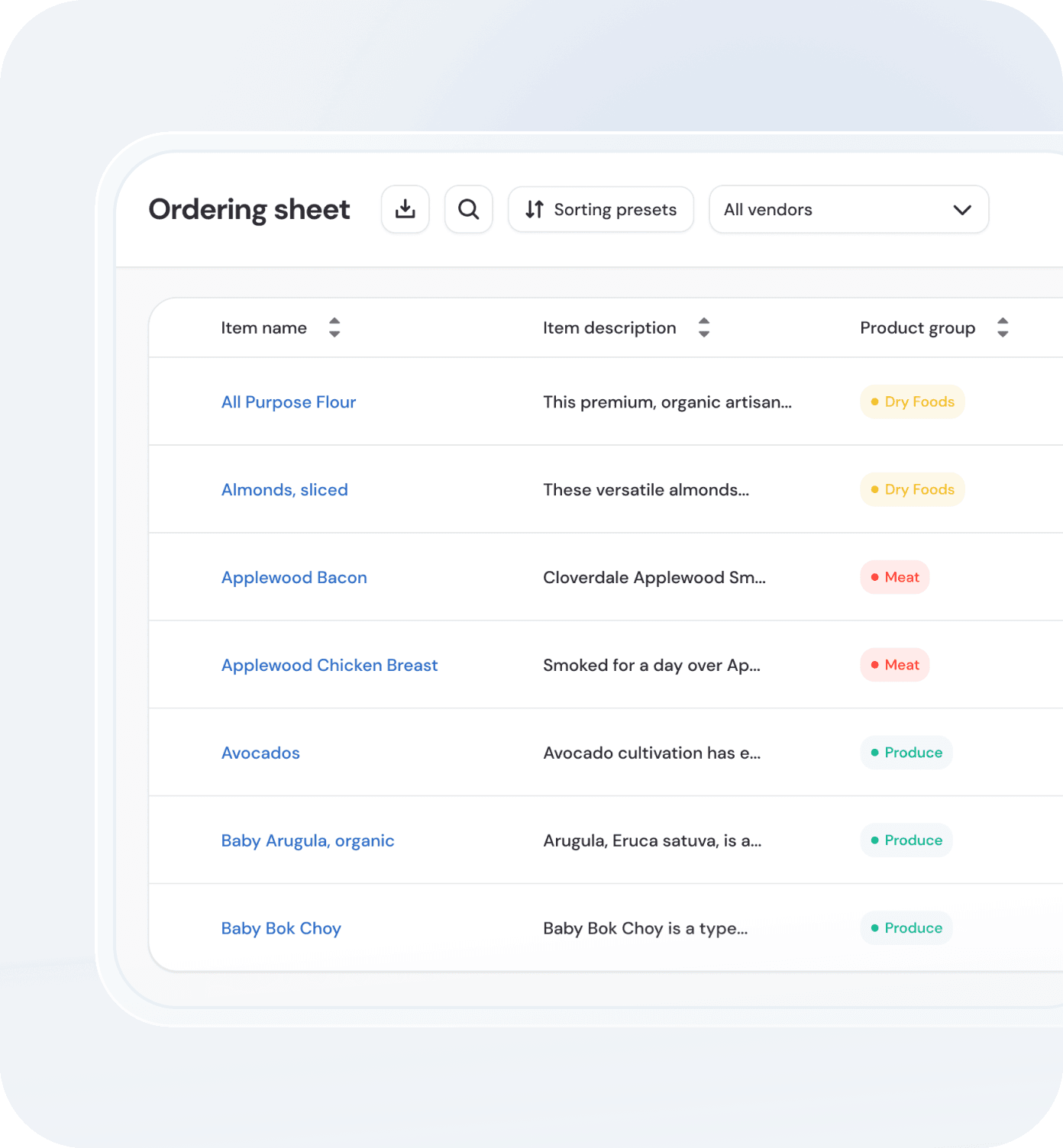


Once the linking is complete, your ordering process becomes faster and smarter:
1
Chef submits an order
Chefs can submit orders directly from their phone—quick and convenient, even at the end of a long shift.
2
MadChef’s algorithm splits it to multiple drafts
MadChef’s algorithm automatically splits the order into multiple drafts, each optimized for the lowest prices across your approved distributors.
3
Chef adjusts quantities if needed
Chefs then adjust quantities as needed to meet each distributor’s delivery minimum—either by increasing certain items or shifting products between distributors.
4
Placing the orders
Once minimums are met, the orders can be placed. Each one is sent as a PDF attachment via email to the distributor’s salesperson or ordering department along with a text notification.
5
Weekly prices updated by manager or bookkeeper
Weekly price updates are handled by a manager or bookkeeper—a simple data entry task that doesn’t require the chef’s time. If you would like your salesperson to handle updates, MadChef can send them a secure link each week (with a friendly Sunday reminder) so they can adjust any prices that have changed. They can also easily upload their weekly price sheet right into MadChef and we’ll handle the rest.
The bottom line
Yes, doing it right takes effort. But that effort pays for itself quickly and repeatedly. With
MadChef, the cost of convenience gets replaced with the benefit of choice, transparency,
and real savings.
In an industry where every dollar counts, the tools are here. It’s time to stop overpaying for
simplicity—and start investing in systems that actually serve your bottom line.